Comments that land
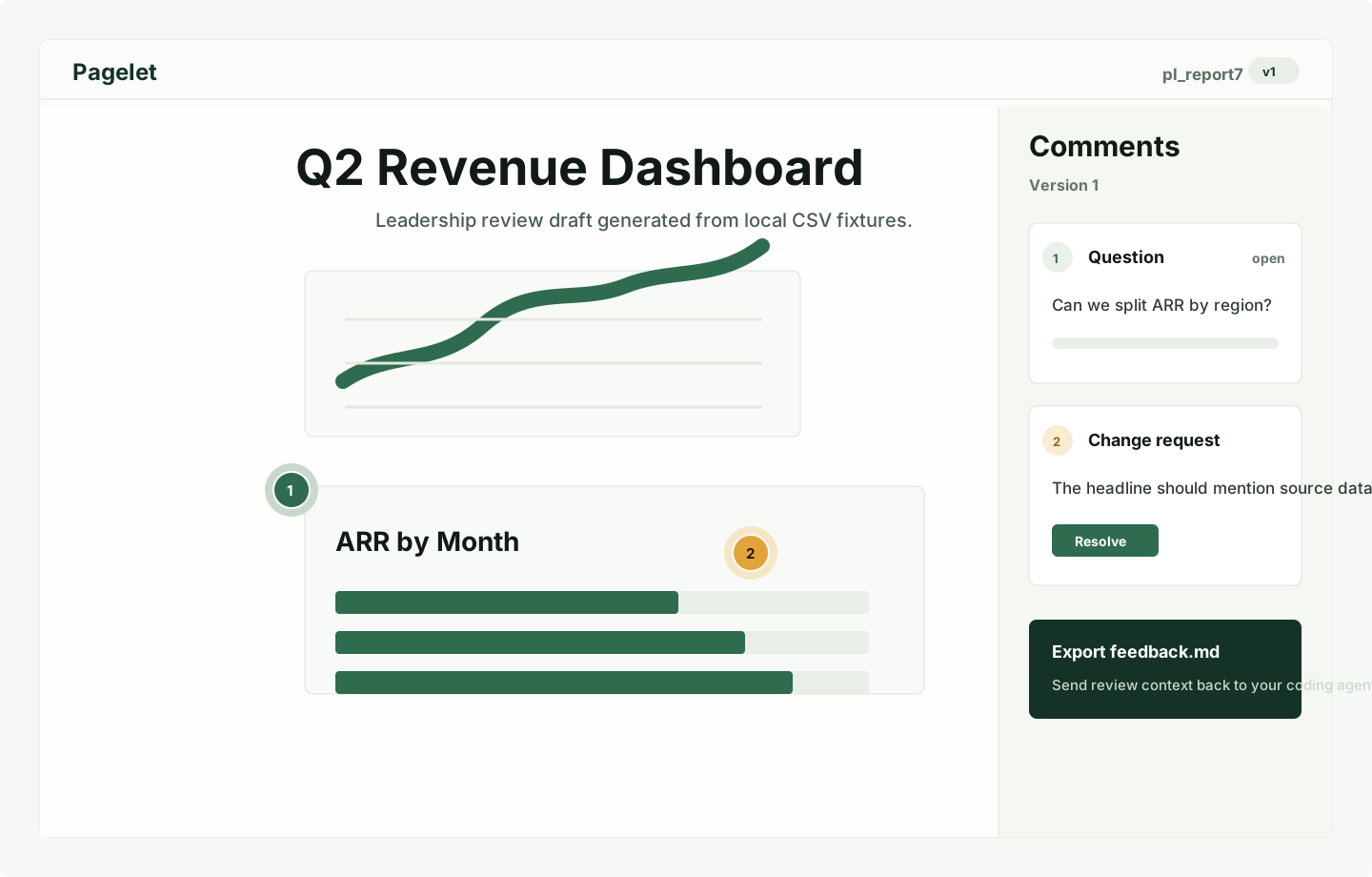
Pin a comment to selected text, an element, or the whole report.
Open source · MIT licensed
Pagelet turns a local HTML report into a private review link. Teammates pin feedback to exact elements; your coding agent gets a compact Markdown brief instead of rereading the whole report.
The loop
One narrow path keeps the report, the reviewers, and the next agent task connected.
pagelet publish report.html
Upload the HTML and its relative assets to a stable review URL.
share /p/pl_…
Reviewers select an element or passage and say what should change.
pagelet feedback <shareId>
Get a Markdown digest with selectors, exact quotes, and comment intent.
pagelet publish report.html
Publish the same file again. Pagelet keeps the URL and adds a version.
Feedback without the context tax
Every item preserves where the reviewer clicked, what they quoted, and the kind of response they expect. The export is small enough to drop directly into the next coding task.
### 1. [blocking] replace

Target: `main > section:nth-of-type(2) > p`
Text: "Revenue grew 12% year over year."

This contradicts the summary table;
it should be 9%.

### 2. [normal] question

Target: `table#metrics tbody tr:nth-of-type(3)`
Text: "Churn 4.1%"

Where does this figure come from?
Purpose-built
Pagelet stays intentionally small: enough product to review generated work without turning the workflow into a CMS.
Pin a comment to selected text, an element, or the whole report.
Typed feedback tells the agent whether to edit, answer, or leave something alone.
Each publish is preserved under the same share link for easy comparison.
Relative images, stylesheets, fonts, and scripts travel with the HTML.
Reviewers need a browser and an allowed email—not your repo or agent setup.
Two CLI commands. Nothing extra occupies the coding agent’s tool list.
Your reports, your boundary
Pagelet runs as one Cloud Run service backed by one GCS bucket. Google OAuth and email-domain allowlists protect reviewer access; reports and comments never require a shared Pagelet SaaS.
Read the ten-minute deployment walkthroughDeploy and operate from the same CLI
# preview the plan
pagelet admin setup --dry-run

# deploy or upgrade
pagelet admin setup

# inspect the service
pagelet admin statusGet started
Install Pagelet, deploy your instance once, then publish reports from any directory. Requires Node.js 22+, Google Cloud, and the gcloud CLI.
Install and use Pagelet
npm install -g @howtox/pagelet

pagelet admin setup
pagelet publish report.html
pagelet feedback <shareId>
Or run the source locally
git clone https://github.com/shaohua/pagelet.git
cd pagelet
npm ci
npm run devThe loop runs end to end and is covered by tests, but it has not been hardened by broad real-world use. Read the security notes before using sensitive data.